5 min read
An international parcel changes hands many times: pickup, hub sorting, loading into a container or aircraft hold, customs clearance, delivery. It is stacked, moved along conveyors and sometimes opened for inspection. Good packaging is the best insurance against damage.
1. Choose the right box
- A new box, double-walled for heavy or fragile items: a reused box loses part of its strength.
- The right size: 5 to 6 cm of space around the item for cushioning, with no empty gaps that let the contents move.
- For several items, one box per consistent batch rather than one large mixed box.
2. Cushion and protect
- Wrap each item separately (bubble wrap, foam, crumpled kraft paper).
- Place heavy items at the bottom and lighter ones on top.
- Fill every gap: the contents must not move when you shake the box.
- Protect corners and fragile surfaces with edge protectors or folded cardboard.
3. Seal it securely
Use packing tape at least 5 cm wide and apply the “H method”: one strip along the centre seam, then one strip along each edge, on the top and the bottom. Avoid string and office tape, which do not hold.
4. Label it
- Remove or cover old labels and barcodes.
- Stick the JP Logistics label flat on the largest side, without covering the barcode or QR code with tape.
- Slip a copy of the recipient's address inside the parcel.
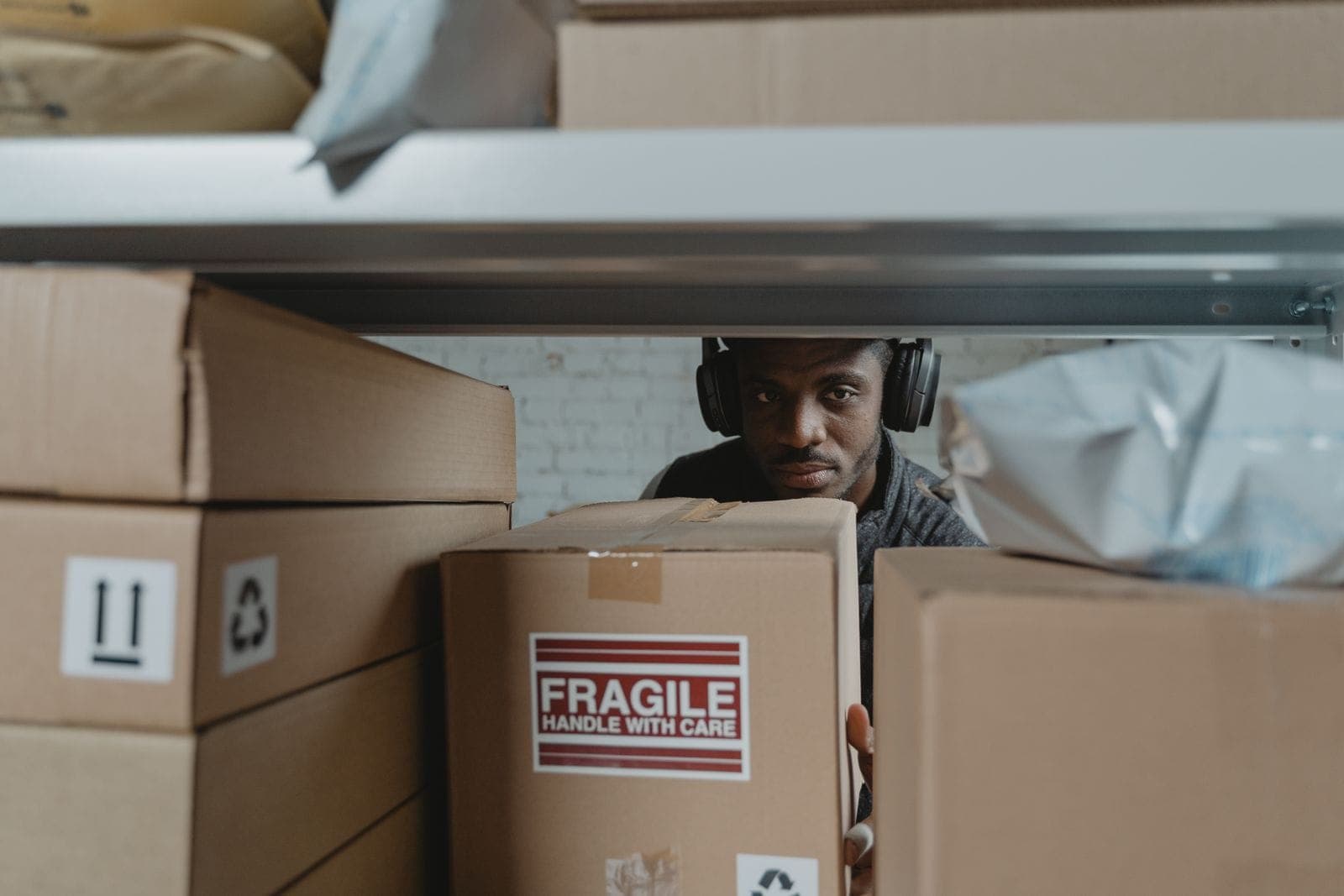
- Add useful markings such as “Fragile” or “This way up”, without overdoing it.
General information given for guidance only: exact rules depend on the countries, carriers and goods. For your specific case, contact our teams.